
- Counseling
NTA Staff Shortage Is Only One Symptom: India Needs Urgent Reform in Medical Examination and Counselling Bodies

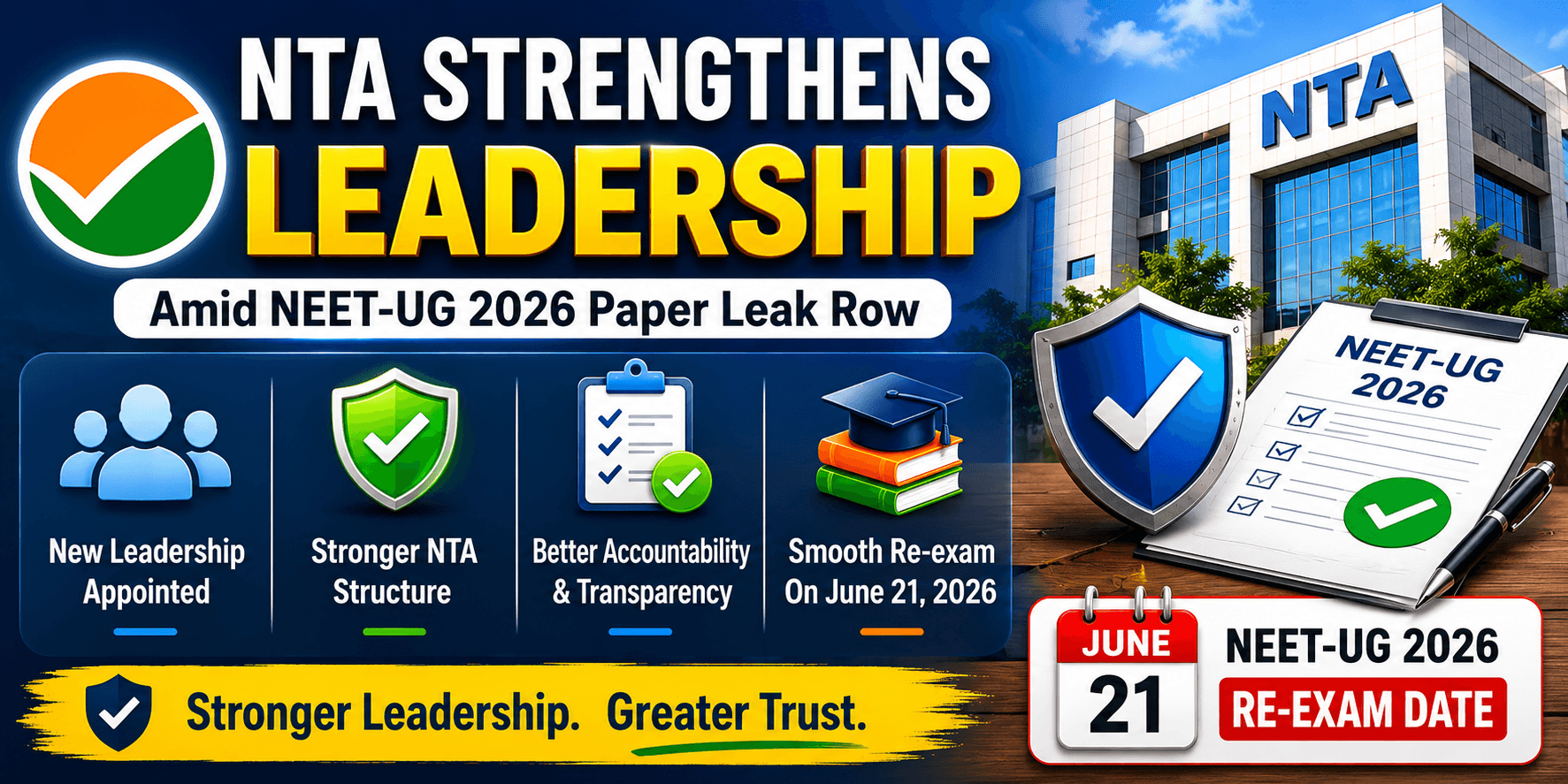
The ongoing NEET paper leak controversy has once again exposed a serious problem inside India’s examination system. Reports suggest that even after reforms were recommended, several senior posts inside the National Testing Agency remain vacant. This raises a very important question: how can an agency responsible for lakhs of students conduct high-stakes examinations without enough permanent, experienced and accountable officers?
But this problem is not limited to NTA alone.
The same weakness can be seen in several important medical education and admission bodies. Whether it is NTA, NBE, NMC, MCC or other counselling-related authorities, the larger problem is the same: shortage of permanent staff, weak institutional structure, lack of accountability, delayed decision-making and absence of experienced professionals in key positions.
The Problem Is Not Only Paper Leak
A paper leak is only the visible part of a deeper crisis. The real issue is structural failure.
When senior posts remain vacant, when important departments depend heavily on contractual or temporary staff, when the same limited group of people handle multiple responsibilities, and when there is no strong decision-making system, mistakes become unavoidable.
Students suffer because:
- exam schedules become uncertain,
- counselling gets delayed,
- seat matrices are uploaded with confusion,
- grievances are not answered properly,
- important decisions are postponed,
- seats remain vacant,
- and students lose trust in the system.
Medical Counselling Also Needs Reform
Every year, medical counselling faces serious problems. Students and parents struggle with unclear rules, late updates, confusing seat matrices, sudden changes, poor communication and delayed responses.
MCC and state counselling systems must become more transparent and professionally managed. When thousands of MBBS, MD, MS, BDS and other medical seats are at stake, there must be a proper permanent structure, trained manpower and accountable officers.
India cannot afford a system where students keep sending complaints and receive only standard replies without real resolution.
Vacant Seats Are Not Only Because of High Fees
Many officials often say that seats remain vacant only because medical college fees are high. But this is not the full truth.
High fees are one problem, but poor counselling management is also a major reason.
If seat matrices are unclear, if counselling rounds are not planned properly, if decision-makers delay action, if vacant seats are not handled in time, and if student grievances are ignored, then seats will naturally remain vacant.
When thousands of PG seats remain vacant, it is not just a financial issue. It is also an administrative failure.
India Has Enough Talent — But Is It Being Used?
India has experienced doctors, medical education experts, administrators, counsellors, legal experts, data analysts and examination professionals across the country. The question is: why are such people not being brought into the system?
Appointments should not depend on lobbying, influence or repeated internal circulation of the same people. Key positions must be filled based on:
- track record,
- experience,
- honesty,
- subject knowledge,
- administrative ability,
- technology understanding,
- and commitment to students.
A country of 140 crore people cannot say that it does not have competent professionals to manage national examinations and medical counselling.
Honest Officers Must Be Protected
Another major concern is that honest and capable people often do not want to enter such systems because the structure is weak, political pressure is high and accountability is selective.
If honest officers are discouraged and only convenient people remain in positions, the system will continue to weaken.
India needs a structure where good people are invited, respected, protected and allowed to work independently.
What Reforms Are Needed?
The government must urgently consider major reforms in medical examination and counselling bodies.
There should be permanent senior-level appointments in NTA, NBE, NMC, MCC and related bodies.
There should be independent audit of examination and counselling processes.
Seat matrix publication must be transparent, verified and time-bound.
Counselling software, data handling and grievance redressal must be professional.
Every important decision must have a responsible officer.
Student complaints should not be closed with routine replies.
Vacant seats must be reviewed in real time.
Medical fee approvals and seat matrix permissions must be strictly monitored.
There should be a national-level reform committee with experienced doctors, administrators, legal experts, counselling experts and technology professionals.
Government Must Act Before the System Collapses
The current situation is a warning. Students are losing faith. Parents are frustrated. Courts are repeatedly being approached. Seats are being wasted. Exams are being questioned. Counselling credibility is being damaged.
This is not the time for cosmetic changes. This is the time for hard decisions.
The government must stop treating each controversy as an isolated event. NEET paper leak, vacant PG seats, counselling confusion, fee issues, seat matrix errors and delayed responses are all connected to one bigger problem: weak governance in medical education administration.
Final Opinion
India’s medical education system needs urgent structural reform.
NTA’s staff shortage is only one part of the story. The same problem exists in examination bodies, counselling bodies and regulatory systems. Without permanent staff, competent leadership, transparent appointments and real accountability, students will continue to suffer.
Medical admission is not a small administrative process. It decides the future of lakhs of students and the future of healthcare in India.
The government must act now — not after another scam, not after another court case, not after another batch of seats goes vacant.
India needs strong institutions, honest decision-makers and transparent counselling systems. Without that, no reform will be complete.