
- Examination
- NEET-UG
NEET-UG Paper Leak: Parliamentary Panel Summons NTA Chief, Review of Reforms and Accountability Begins

The NEET-UG 2026 paper leak controversy has now reached a serious parliamentary review stage. The Parliamentary Standing Committee on Education, Women, Children, Youth and Sports has summoned National Testing Agency Chairperson Pradeep Kumar Joshi and senior officials from the Education Ministry for deliberations on the alleged paper leak and the implementation of reforms in NTA.
The committee, headed by Congress leader Digvijaya Singh, is expected to seek the views of top officials on May 21. The officials summoned include Secretary, Department of Higher Education, Ministry of Education, Vineet Joshi, and NTA Chairperson Pradeep Kumar Joshi.
Why the Parliamentary Panel Has Stepped In
The NEET-UG 2026 examination held on May 3 was cancelled after allegations of paper leak and examination irregularities. According to reports, nearly 23 lakh candidates had registered for the test, making it one of India’s largest entrance examinations.
The NTA reportedly received information about alleged malpractice on the evening of May 7, four days after the exam. The examination was later cancelled, and the re-exam has been scheduled for June 21.
Now, the parliamentary panel will examine whether reforms recommended earlier were properly implemented and whether NTA had enough safeguards to prevent such a breach.
Review of K. Radhakrishnan Committee Recommendations
One of the key agenda points is the implementation of the K. Radhakrishnan Committee report on NTA reforms. The committee was formed after earlier examination controversies and had recommended stronger systems to improve the credibility, security and accountability of national-level testing.
Reports have raised concerns that many recommended reforms were still not fully implemented when the NEET-UG 2026 controversy occurred. This makes the parliamentary review important not only for fixing responsibility but also for preventing future examination failures.
Legal and Administrative Importance
This summons is not merely a routine meeting. It carries legal and administrative significance because the committee may seek explanations on:
- why the leak was not prevented,
- whether internal controls were adequate,
- whether NTA followed recommended reforms,
- whether there were lapses in paper security,
- whether senior officials acted promptly after receiving alerts,
- and what structural reforms are needed before future examinations.
The parliamentary panel can also record observations that may influence future policy, administrative accountability and examination reform.
Future Implications for NEET and NTA
The outcome of this review may have long-term implications for NEET and other national entrance examinations.
First, NTA may face stronger scrutiny over its internal structure, staffing pattern, outsourcing model and security mechanisms. If weaknesses are found, the agency may be pushed toward major restructuring.
Second, paper-setting, moderation, printing, digital storage, transport and exam centre protocols may be reviewed in detail. Every stage of the examination chain could come under stricter monitoring.
Third, the proposed shift of NEET-UG to computer-based mode from 2027 may receive greater urgency. Education Minister Dharmendra Pradhan has announced that NEET-UG will move to CBT mode from next year, but such a transition will require strong infrastructure, cybersecurity and fairness safeguards.
Fourth, students may see more transparency in exam-city allotment, admit card systems, question paper security and grievance redressal.
Why This Matters for Students
For students, this issue is not political. It is personal.
NEET is connected to years of preparation, family sacrifice and the dream of becoming a doctor. When a paper leak happens, it does not only cancel an exam. It breaks the confidence of honest students.
The parliamentary panel’s review should therefore focus on student protection, not only administrative explanation.
Students need:
- a fair re-exam,
- clear official communication,
- timely admit cards,
- safe exam centres,
- strict action against guilty persons,
- and a stronger system for future batches.
Larger Reform Question
The NEET-UG 2026 controversy has exposed a deeper question: Can India continue to conduct exams involving more than 20 lakh candidates without a fully secure, transparent and accountable institutional structure?
If the answer is no, then reforms must go beyond temporary damage control.
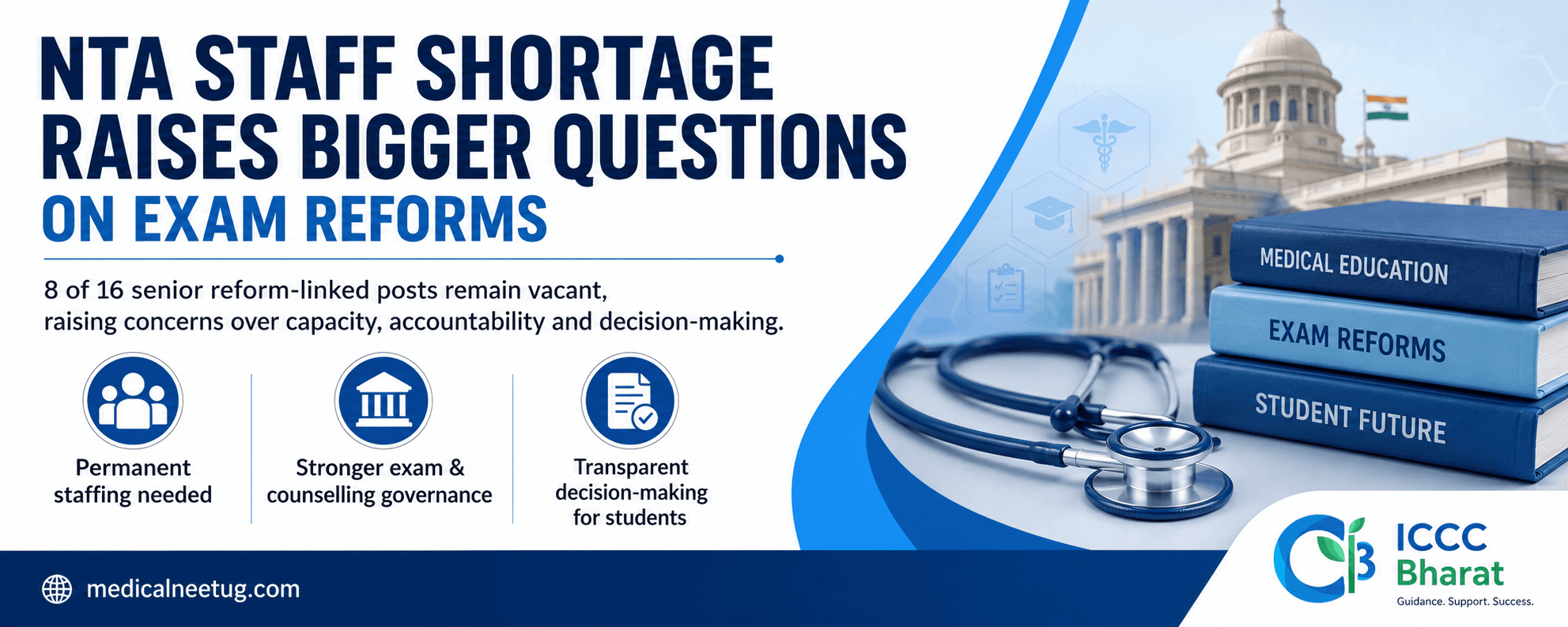
India needs a modern examination system with permanent expert staff, strong technology, independent audits, secure paper-setting mechanisms, cybersecurity protocols, transparent accountability and fast legal action against malpractice networks.
Conclusion
The parliamentary panel’s decision to summon the NTA chief and senior Education Ministry officials is a major development in the NEET-UG 2026 paper leak case.
This review must not become only a formal discussion. It should lead to real reform, clear accountability and stronger protection for students.
The future implication is clear: India’s examination system must move from reaction after failure to prevention before failure.
For lakhs of NEET aspirants, the message should be simple — their hard work must be protected by a system that is fair, secure and accountable.